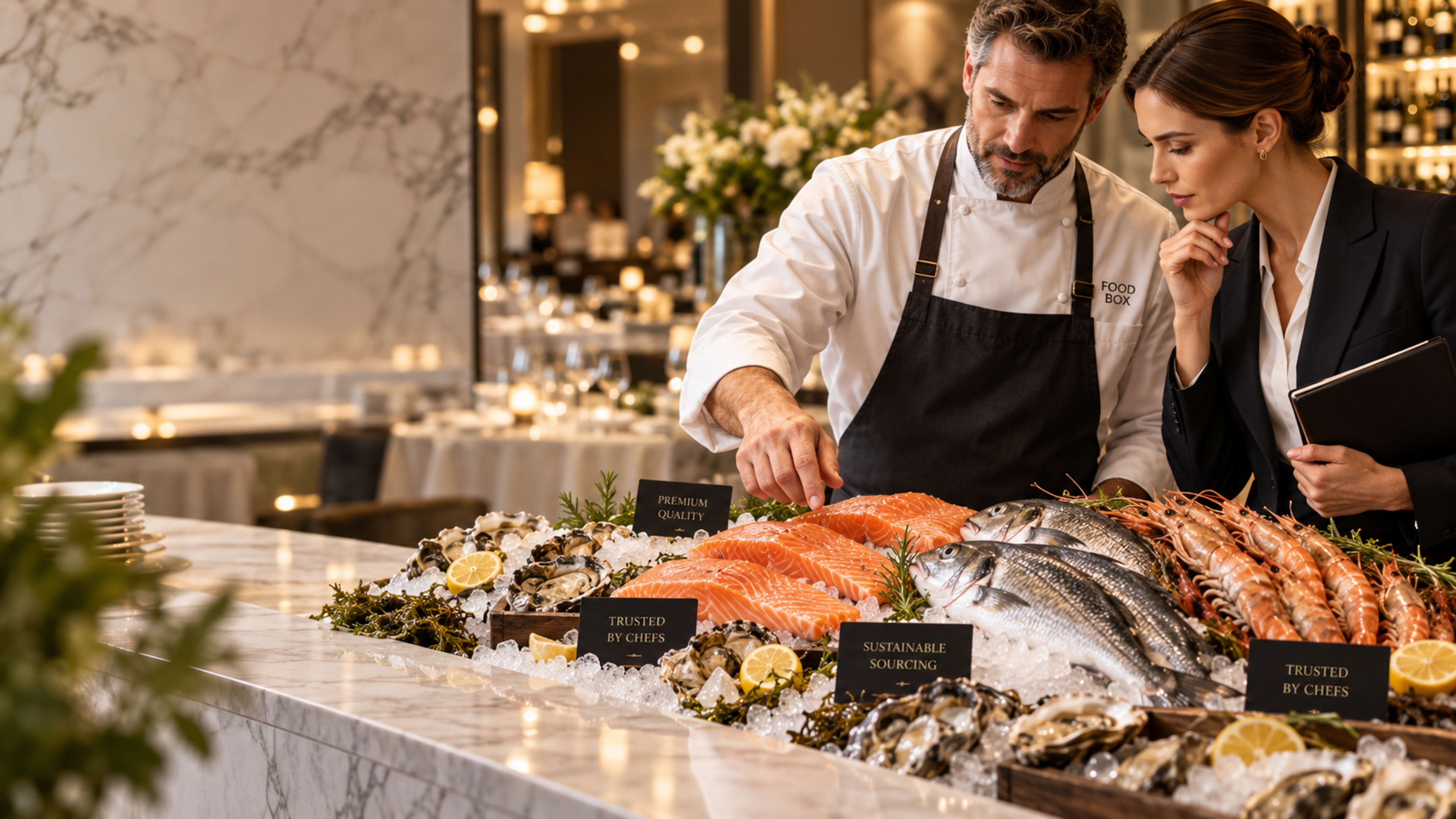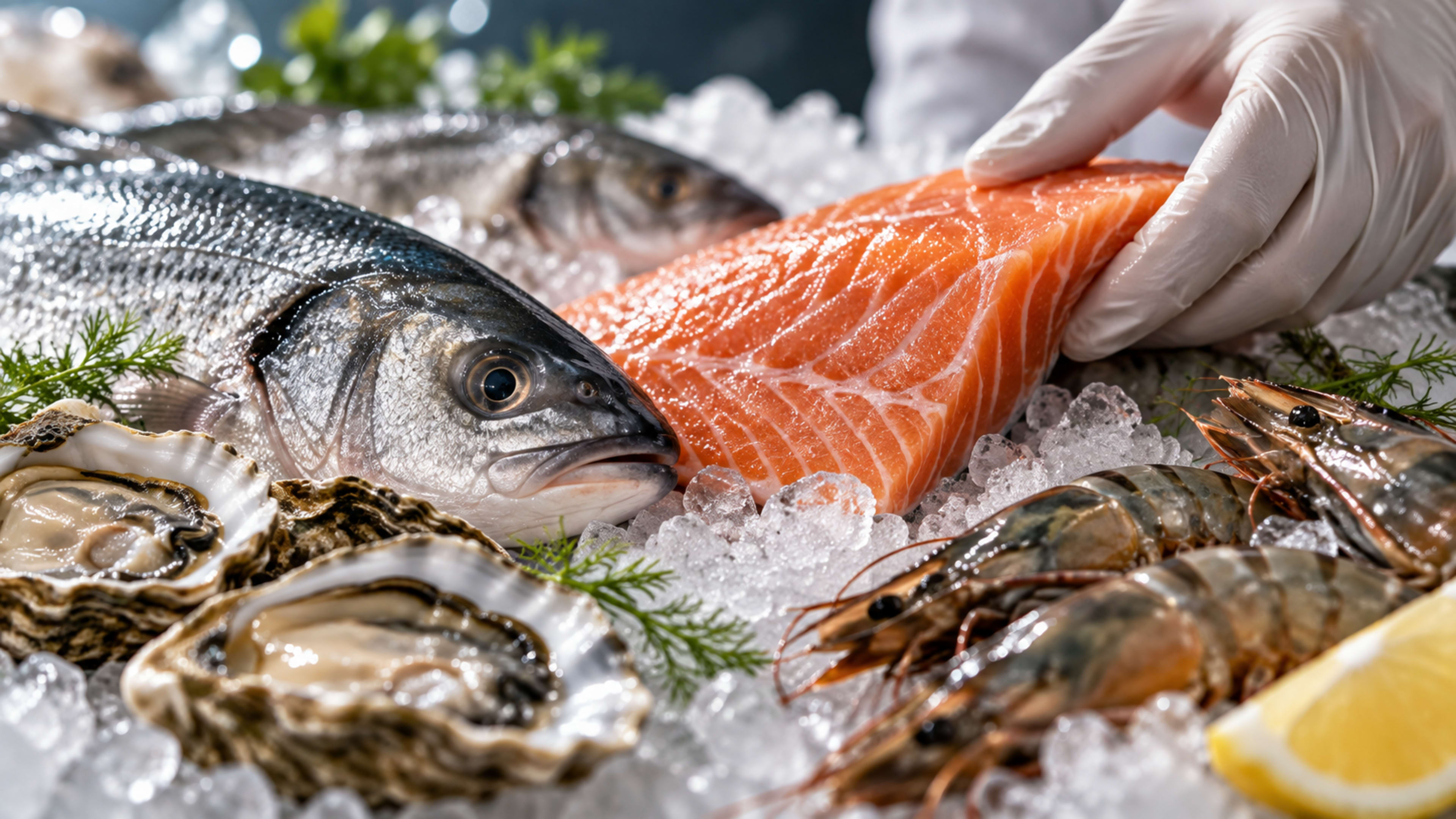
A seafood delivery can look perfectly fine when it reaches the kitchen. The packaging is intact, the product looks right, and the order appears to match what procurement requested.
But that is only the first test.
The more useful judgment begins when the seafood reaches the prep station. A fillet that varies in thickness can change portioning and cooking performance. Shrimp outside the expected size range can alter the number of pieces required per plate. Excess trimming reduces usable yield. A product that appears acceptable at receiving can still create additional labor, higher food cost, and an inconsistent final dish once service begins.
For a professional kitchen, seafood quality is therefore not judged by appearance alone.
It is measured by how well the product performs against the specification the kitchen planned for.
Quality Becomes Useful When It Can Be Measured
Words such as “premium” and “high quality” are easy to put on a catalogue.
They become useful to a chef only when they translate into something measurable.
Professional kitchens work with details such as size, grading, cut, trim, weight range, preparation format, product condition, and storage requirements. Those details determine how an ingredient moves through preparation and, ultimately, what reaches the guest.
Two products may carry the same general description and still behave very differently in the kitchen. One may require additional trimming. Another may vary noticeably in size. A third may produce inconsistent portions or require more correction during prep.
The kitchen absorbs those differences in labor, waste, cooking time, and food cost.
Quality, in that context, is not simply whether seafood looks good when the box is opened. It is whether the product does what the kitchen expected it to do.
Specification Is Where the Kitchen Sets the Standard
The menu usually exists before the order does.
The chef already knows the intended portion. The recipe has a cooking method. The dish has a presentation standard. F&B has a target food cost.
The seafood has to fit that system.
Take shrimp. A change in size grading does more than change the appearance of the plate. It can alter the number of pieces required per portion, affect presentation, and change the economics of the dish.
The same principle applies to salmon. If fillet thickness or usable format varies significantly, portioning becomes less predictable, and the kitchen may have to adjust during preparation.
This is why specification control matters in professional seafood purchasing.
The question is not simply whether a supplier can provide salmon, shrimp, lobster, or scallops. It is whether the product can be supplied in a form that supports the kitchen using it.
Food Box works with professional hospitality buyers on product specifications, order schedules, and volume requirements according to the needs of each operation, rather than treating every kitchen as if it requires the same product format.
Explore Food Box seafood solutionsYield Is Part of Quality Too
A lower purchase price does not automatically make a seafood product less expensive to use.
Procurement sees what the business paid. The kitchen sees what remains after preparation. That difference matters.
If one product requires more trimming, additional sorting, or extra preparation before it can be portioned, the kitchen may get less usable value from every purchased kilogram.
For a hotel or restaurant serving the same seafood dish repeatedly, even modest differences in yield can become commercially significant once they are repeated across hundreds of portions.
Consider two shrimp products quoted at similar prices. If one reaches the prep station closer to the format required by the recipe while the other requires additional work before portioning, their invoice prices may look comparable while their operational costs are not.
That is why professional seafood purchasing should consider usable value, not purchase price in isolation.
For chefs, that means asking how efficiently the product moves through preparation. For F&B teams, it means understanding the relationship between the purchased quantity and the plated portion. For procurement, it means comparing products on the value they produce inside the kitchen, not simply the price attached to the case.
Handling Can Undo Good Product Quality
A good product can still reach the kitchen in poor condition if the journey before delivery is not properly controlled.
Storage, transportation, delivery timing, and handling all influence what the chef eventually receives.
This is where food-safety systems become relevant to product performance as well as compliance.
Food Box states that its products are handled under HACCP and ISO 22000 certified conditions, with traceability maintained from source to kitchen, alongside Halal certification.
Learn more about Food Box’s quality and food-safety standardsThose systems do not replace the property's own receiving procedures, but they establish a documented framework for how the product is handled before it reaches the kitchen.
For a broader look at what happens during that part of the journey, Food Box's guide to the role of a seafood distribution company covers sourcing, storage, logistics, and product integrity across the supply chain.
The Receiving Check Should Confirm What Was Already Agreed
The receiving area should not be the first place a kitchen discovers what it has bought.
By the time a delivery arrives, the important details should already be clear: the product ordered, the specification agreed, the expected condition, and the way the product needs to enter storage.
Receiving should then become a verification step.
Does the delivery match the order? Does the grading or cut match the agreed specification? Is the packaging in acceptable condition? Has the product arrived within the expected delivery window?
The distinction matters.
Receiving is not where the kitchen should invent its quality standard. It is where the kitchen confirms that the standard already agreed with procurement and the supplier has actually been met.
When that process works consistently, less kitchen time is spent correcting problems after delivery.
That becomes particularly important in larger hospitality operations where one seafood category may be supporting several restaurants, banqueting, room service, or event requirements at the same time.
Different Kitchens Need Different Definitions of “Right”
There is no universal seafood specification that works equally well for every hospitality operation.
A fine dining restaurant may place greater importance on size consistency, cut precision, and presentation.
A hotel buffet may care more about predictable portions, volume efficiency, and ease of preparation.
A catering operation producing hundreds of covers within a fixed service window may prioritise a format that reduces preparation while still supporting controlled serving sizes.
None of those priorities makes one operation's definition of quality more correct than another. They simply show why product quality has to be judged in context.
The strongest purchasing decisions begin with the kitchen's requirement and work backward to the specification needed to support it.
Food Box applies the same B2B approach across hotels, restaurants, and catering businesses, including catering and hospitality events, where volume and service format create different operational demands.
Quality Has to Repeat
A seafood product can perform perfectly once and still be difficult for a professional kitchen to build a menu around.
Hospitality operations need the specification to hold over repeated orders.
If grading moves, trim changes, usable yield varies, or preparation requirements are noticeably different from one delivery to the next, the kitchen has to compensate.
That compensation costs time and makes food costing less predictable.
This is where product quality and supplier performance eventually meet.
The product should not simply satisfy the chef during a trial. It should continue to behave in a way the kitchen can plan around.
What This Means Before the Next Order
Seafood quality is easy to describe in broad terms. It is more useful to define what quality means for the kitchen buying it.
The product should arrive in the expected condition. It should match the agreed specification. It should produce a usable result that supports the food-cost model. And it should perform in preparation the way the chef expected when the dish was designed.
Before the next order is placed, procurement and kitchen teams should be able to answer three questions:
• What written specification is this product expected to meet?
• What will the kitchen check when the delivery arrives?
• How will usable yield and preparation requirements be considered alongside purchase price?
Those questions turn “quality” from a supplier claim into something the kitchen can actually evaluate.
If your hotel, restaurant, or catering operation is reviewing seafood specifications or assessing whether current products are delivering the expected value in the kitchen, Food Box’s team can discuss available products, product specifications, delivery coverage, and supply requirements.