A seafood dish may be designed down to the gram before the first order is ever placed.
The chef knows the portion. The cooking method is fixed. The plating has been tested. F&B knows what the dish should cost.
Then the seafood arrives in a format that does not quite fit the plan.
The salmon is thicker than expected at one end. The lobster tail size is different from the specification used during costing. A product requires more trimming than the kitchen allowed for.
Nothing is necessarily wrong with the seafood itself, but the kitchen now has to adapt around it.
That is why, in professional hospitality, a seafood specification is not simply paperwork attached to an order. It is part of how the dish is built.
The useful question is not whether the kitchen has a specification. It is whether that specification is detailed enough to protect the way the dish was designed to work.
A Product Name Is Not a Specification
“Salmon,” “lobster,” or “scallops” may be enough to describe a product category. They are not enough to tell a professional kitchen exactly what will arrive.
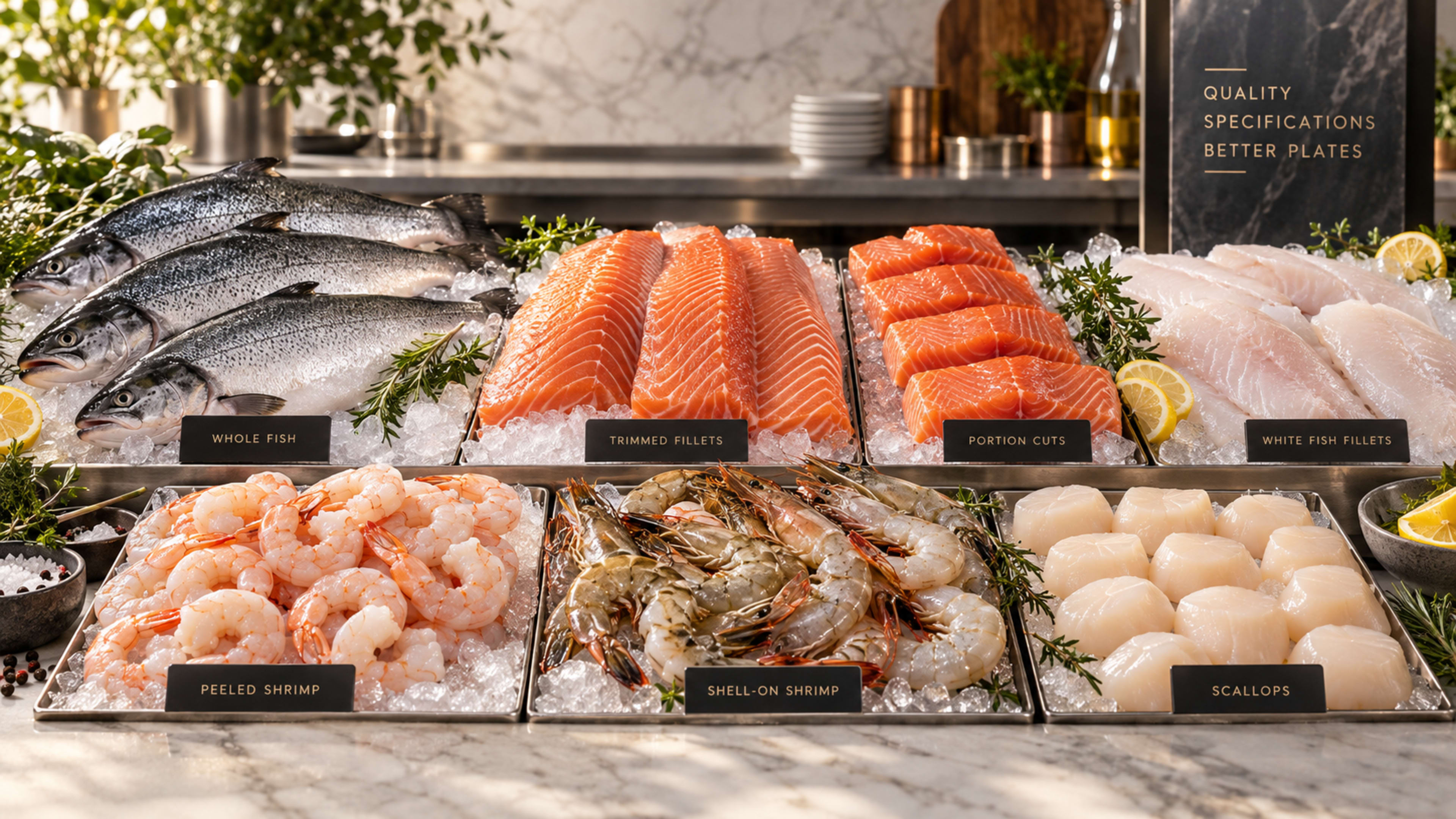
The detail sits underneath the name. Size or grading, cut, trim, weight range, preparation state, and pack format can all change how the same seafood category behaves once it reaches the prep station.
For the chef, those differences affect preparation, portioning, cooking, and presentation.
For procurement, they determine whether two supplier quotations are actually describing comparable products.
For F&B, they affect usable yield, labor, portion control, and the food-cost assumptions behind the menu.
This is why professional hospitality teams should not purchase seafood by product name alone. They purchase against a specification.
The Cut Changes More Than the Plate
A cut or preparation format can look like a presentation decision. Operationally, it affects much more.
A scallop specification suited to precise plating reduces the amount of adjustment required before service. A lobster format that works for one menu application may create unnecessary preparation for another.
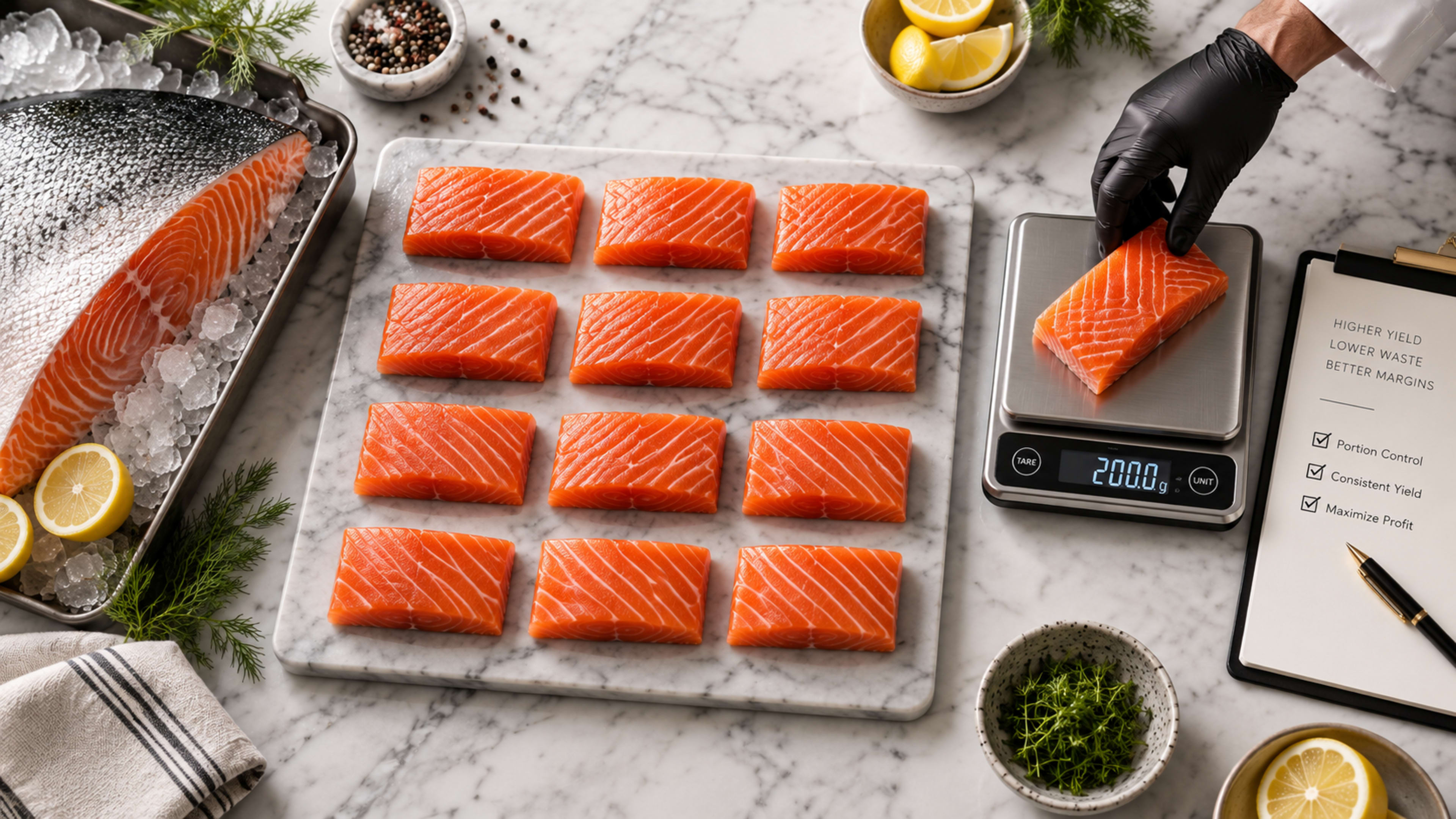
The same principle applies to salmon. A format that arrives close to what the recipe requires can simplify portioning and reduce corrective trimming. A less suitable format may still be usable, but the kitchen has to spend additional time and product getting it into the required shape.
Those differences eventually appear in labor, yield, and portion cost.
The right specification therefore begins with the dish, not the catalogue.
Why Grading and Trim Belong in the Same Conversation as Price
Size grading and trim are not simply visual details. They affect the economics of the ingredient once it enters the kitchen.
A lower-priced format can require more preparation than a product that costs more per kilogram but arrives closer to the state the recipe actually needs.
Grading can affect kitchen performance too. Products with noticeably different sizes or thicknesses may require different portioning or cooking adjustments. During a busy service, those small corrections create work that a tighter specification could have prevented.
This is where specification connects with yield and food cost.
Purchase price tells procurement what the product costs when it enters the property. The specification helps determine what the kitchen can actually produce from it.
The purpose here is not to choose the cheapest specification. It is to define the format that allows the kitchen to produce the intended dish efficiently and repeatedly.
What Procurement Should Put in Writing
A useful seafood specification should remove ambiguity before the order is delivered. Depending on the product and menu application, procurement and kitchen teams should agree on details such as:
• Size or grading: the required range rather than a broad description such as “large.”
• Cut or preparation format: what work has already been completed and what remains for the kitchen.
• Portion or weight range: including an acceptable tolerance where the operation requires one.
• Preparation state: frozen, cleaned, trimmed, portioned, or another clearly defined format.
• Pack format: how the product will be supplied and in what quantities.
• Required volume: including expected changes during seasons, events, or peak operating periods.
• Delivery requirements: the frequency and lead time the operation needs to maintain production.
The purpose is not to make purchasing more complicated. It is to prevent important differences from being discovered only after the product reaches the receiving area.
A clear specification also makes supplier comparisons more meaningful. Two quotations cannot be compared properly if one supplier is quoting a different grade, preparation format, pack size, or weight range from another. The price may be different because the product itself is different.
A Useful Specification Connects Three Teams
Seafood specifications should not belong exclusively to procurement.
The chef understands how the ingredient has to perform in the dish. F&B understands the portion and food-cost model. Procurement understands the commercial terms, volume requirements, and supply conditions.
A strong specification connects all three.
Without the kitchen’s input, procurement may negotiate an attractive price for a format that creates more work during preparation. Without procurement’s input, the kitchen may define an ideal product that is difficult to source consistently at the required volume. Without the F&B calculation, neither team knows whether the final format supports the commercial model behind the menu.
The specification becomes useful when those requirements meet in the same document.
Different Kitchens Need Different Specifications
A fine dining restaurant, hotel buffet, banqueting kitchen, and catering operation may all purchase the same seafood category while requiring very different formats.
A fine dining restaurant may prioritise portion precision because presentation is central to the dish. A hotel buffet may care more about preparation efficiency and predictable serving sizes across high volume. A banqueting kitchen may need a format that can move quickly through production while still generating a controlled number of portions. A catering operation may place additional emphasis on repeatability because production is built around a fixed guest count and service time.
There is no single specification that solves all four requirements.
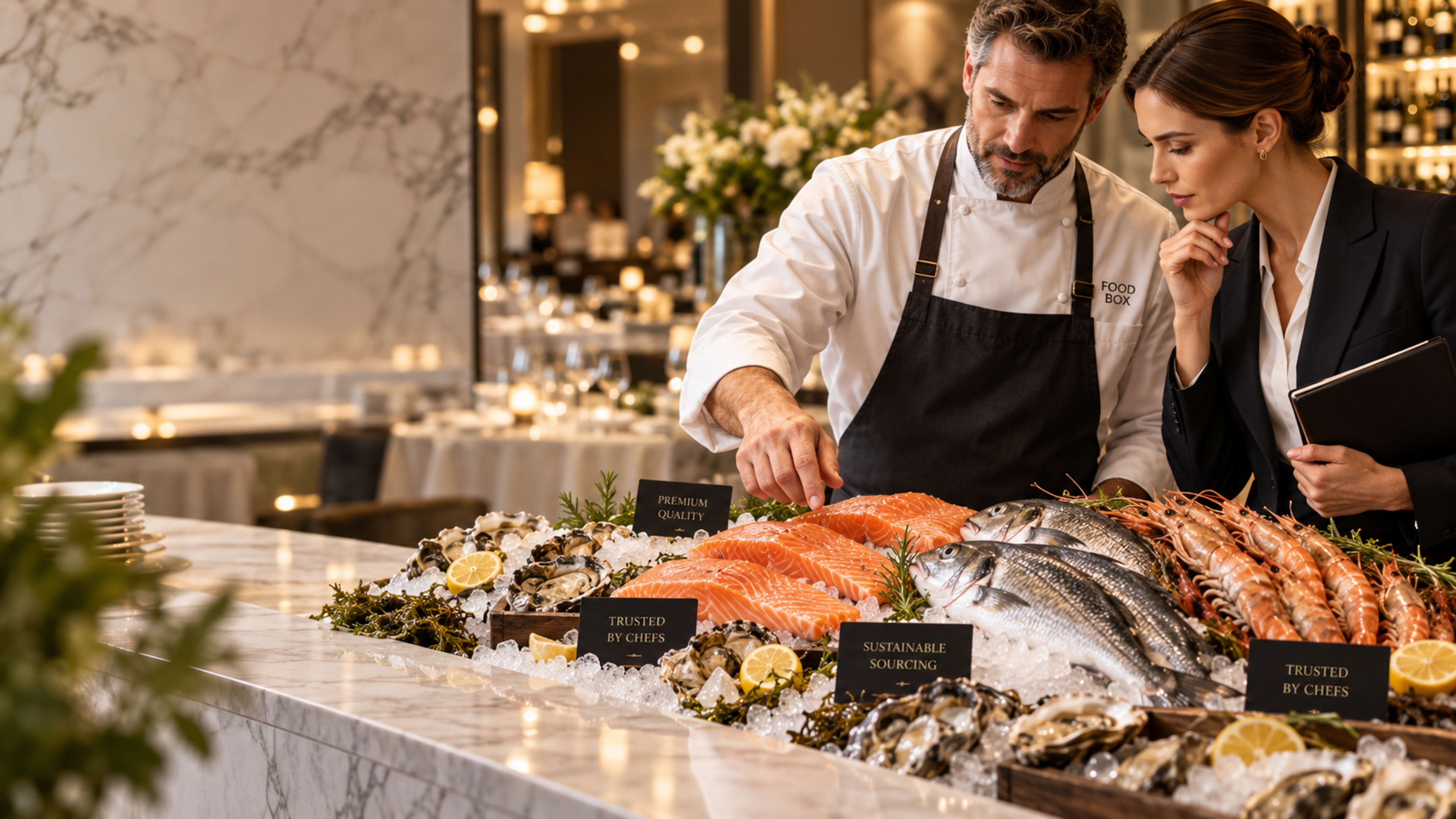
Food Box’s B2B model reflects that operational difference. Its account managers customise product specifications, order schedules, and volume pricing according to each professional buyer’s needs. Food Box works exclusively with professional buyers including hotels, restaurants, catering companies, and cloud kitchens.
Explore Food Box seafood solutionsSpecification Has to Work Beyond the First Order
A seafood format can perform perfectly during a trial and still become difficult for a kitchen to use if the same specification cannot be maintained over time. That is why the supplier conversation should not stop at the sample.
A professional kitchen needs to understand whether the required grading, preparation format, weight range, and volume can continue to support the menu through normal service, seasonal demand, and higher-volume periods.
For procurement, that changes the question from: Can the supplier provide this product? to: Can the supplier keep providing the product in the form our operation requires?
That distinction becomes even more important for hospitality groups running several outlets or properties.
Food Box operates scheduled delivery routes across Cairo and Giza, Alexandria, Hurghada and the Red Sea, Sharm El-Sheikh, and the North Coast during summer, with different lead times depending on destination.
For procurement, the specification and the supply schedule therefore need to work together. A precisely defined product has limited value if it cannot reach the kitchen according to the operating rhythm built around it.
View Food Box delivery areas and schedulesThe Best Specification Starts With the Menu
The strongest seafood purchasing decisions work backward.
Start with the dish. What portion does the chef need? How should the product behave during preparation and cooking? How much preparation can the kitchen realistically absorb? What usable yield does the food-cost model require? How many portions need to be produced? What volume will the operation require during ordinary service and peak periods?
Those answers give procurement something far more useful than a generic product name. They define what the kitchen actually needs to buy.
That turns seafood purchasing from a catalogue decision into an operational decision and gives chefs, F&B teams, and procurement a common language before price negotiations begin.
A well-written specification does not make seafood purchasing more complicated. It removes uncertainty from it.
If your hotel, restaurant, or catering operation is reviewing seafood grades, preparation formats, volumes, or supply requirements, Food Box’s team can discuss product specifications, ordering schedules, and delivery requirements.