A guest at a hotel restaurant tells the server they have a shellfish allergy and asks whether the seafood pasta is suitable for them.
The menu describes the dish as a combination of seafood, herbs, and a light sauce. The kitchen knows the recipe includes salmon and shrimp, but the server is unsure whether the sauce contains additional seafood ingredients or whether the dish shares preparation equipment with other shellfish dishes.
The question cannot be answered reliably from the menu description alone.
Someone needs to confirm the ingredients, understand how the dish is prepared, and determine whether the kitchen can accommodate the guest’s specific allergy without unacceptable cross-contact risk.
For professional hospitality operations, seafood allergen management is not simply a matter of identifying ingredients on a product label. It requires accurate information to move from supplier documentation through purchasing and kitchen preparation to the staff communicating directly with guests.
When that information is incomplete, even a well-designed menu and an experienced culinary team can face avoidable uncertainty during service.
Seafood Is Not One Allergen Category
In culinary language, seafood is a convenient description covering different types of aquatic products. From an allergen-management perspective, however, the distinctions matter.
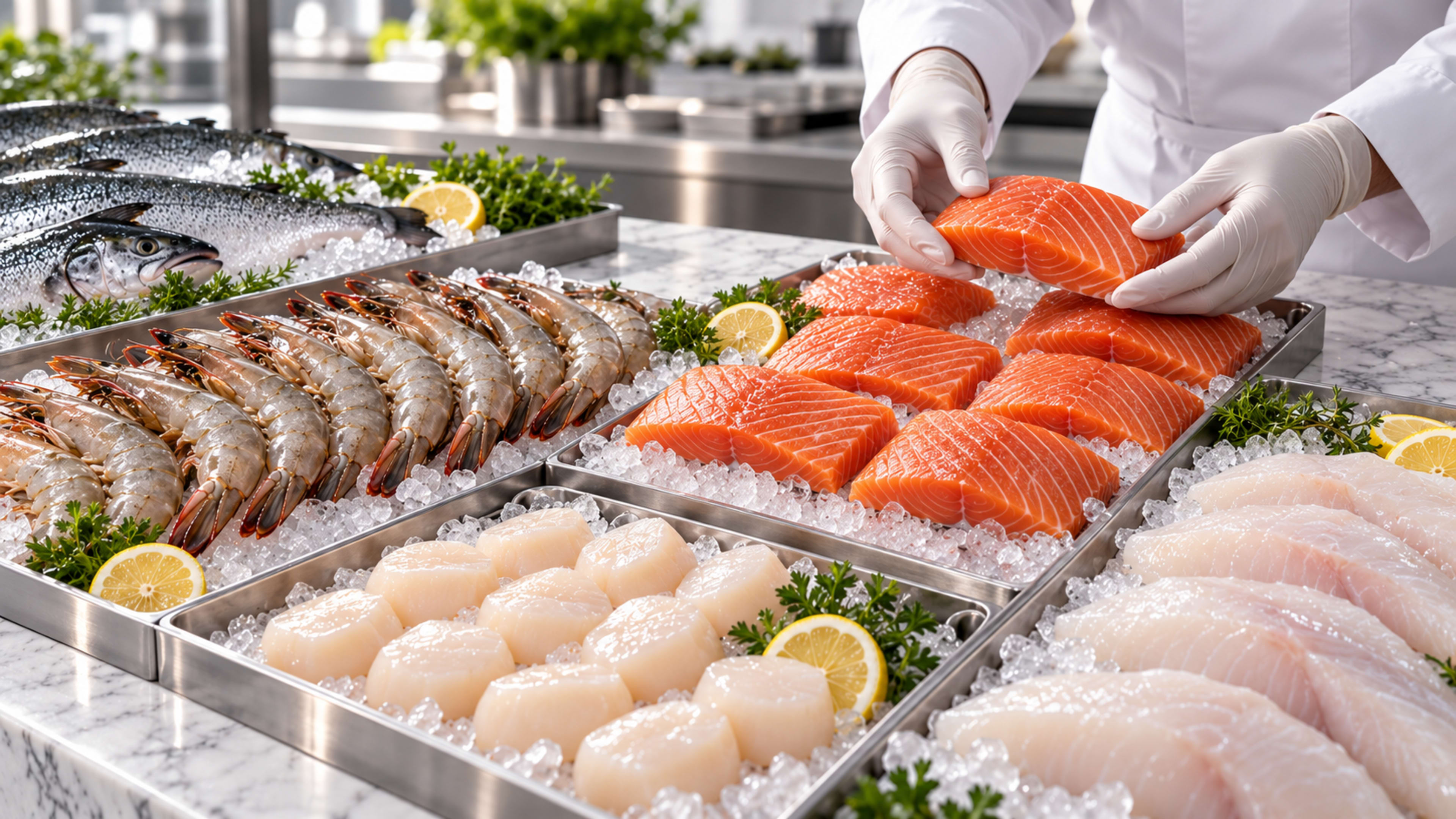
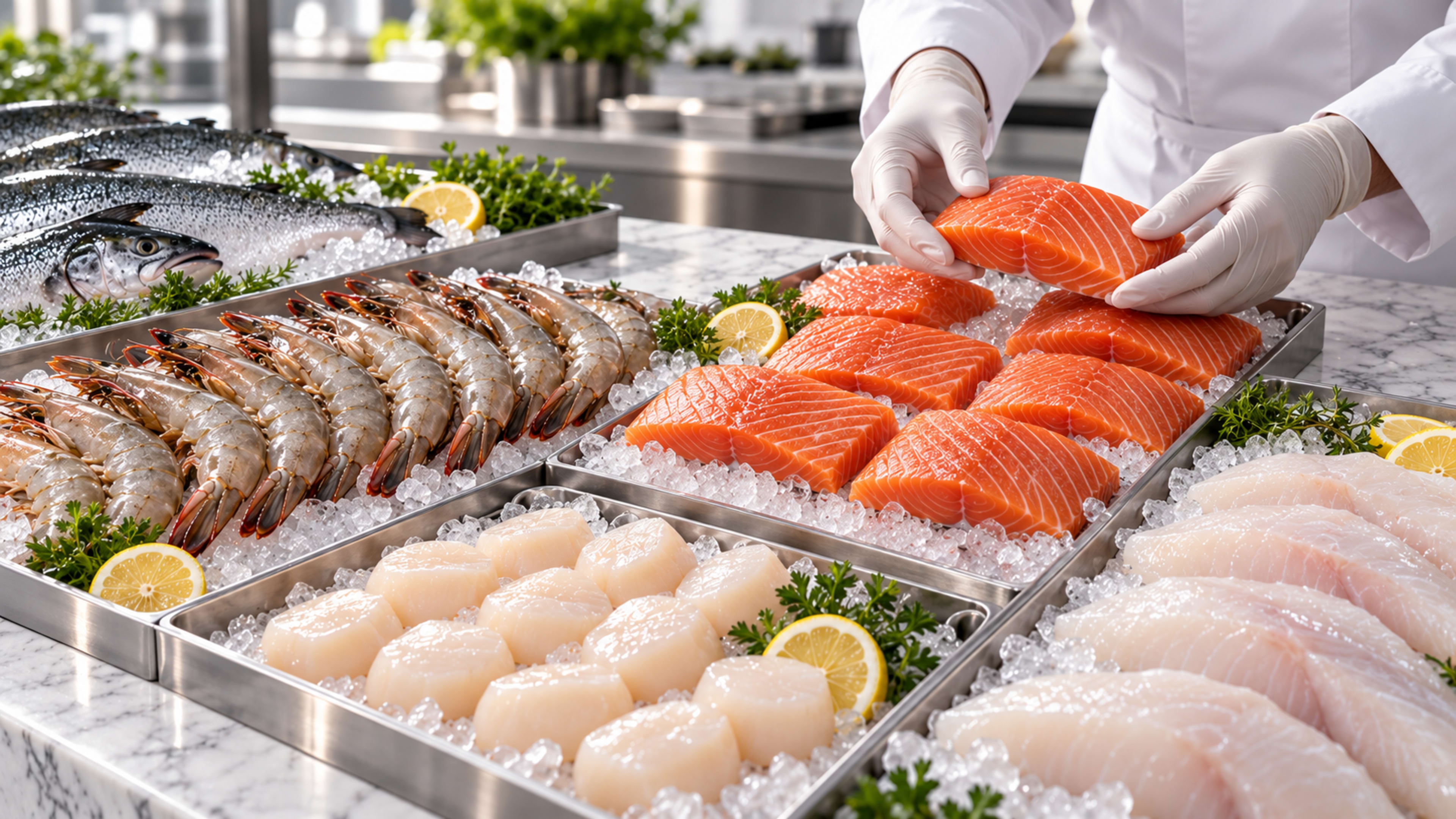
Fish, such as salmon, belong to a different biological group from crustacean shellfish, such as shrimp and lobster. Molluscan shellfish, including scallops, represent another group.
These categories are relevant because allergies are associated with specific proteins, and a guest’s reported allergy should not be interpreted solely through a broad description such as “seafood allergy.”
Under the US Food and Drug Administration’s food-allergen framework, fish and crustacean shellfish are separate major allergen categories. Molluscan shellfish, including scallops, are not classified as major allergens under that particular US labelling definition.
That regulatory distinction does not mean scallops cannot cause allergic reactions, nor does it establish that they are suitable for someone with a shellfish allergy.
For kitchens, the practical rule is to identify the actual ingredient and assess the individual allergy request rather than rely on broad category assumptions. The FDA’s food allergen guidance provides further detail on these distinctions. These US classifications are used here as technical references, not as a substitute for applicable Egyptian food regulations.
Allergen Management Begins Before the Recipe Is Prepared
A restaurant cannot communicate accurate allergen information if it does not know exactly what ingredients it is purchasing.
For seafood products, procurement should establish the product identity and obtain relevant ingredient and allergen information where applicable. The level of detail required depends on the product. A single-ingredient frozen seafood item presents a different documentation requirement from a prepared seafood product containing sauces, seasonings, coatings, or other components.
For a multi-ingredient product, the kitchen needs to understand the complete ingredient declaration and any relevant allergen warnings or processing information.
This becomes particularly important when seafood product specifications change. A replacement product may appear equivalent in its general commercial category while containing different additional ingredients. If procurement accepts the substitution without communicating the change, the kitchen may continue working from an outdated recipe or allergen record.
The supplier’s product information is therefore one input into the restaurant’s allergen management system. It is not the complete system. The final responsibility also involves understanding how the ingredient is stored, combined, prepared, and served within the operation.
Cross-Contact Can Introduce Allergens That Are Not in the Recipe
A dish does not have to intentionally contain shrimp to present a shrimp-allergen risk. Unintended contact can occur when allergenic proteins are transferred between foods through shared equipment, utensils, surfaces, ingredients, or handling practices. This is known as allergen cross-contact.
Consider a kitchen preparing grilled salmon for a guest who has reported a shrimp allergy. The salmon recipe itself may contain no shrimp. However, if the same preparation surface or utensils were previously used for shrimp without appropriate cleaning, the kitchen needs to assess the possibility of allergen transfer.
Removing visible seafood residue is not necessarily enough to control that risk. Effective seafood handling procedures for allergen management may require designated equipment or preparation areas, appropriate cleaning procedures, handwashing, glove changes, and clear separation of ingredients. The precise controls depend on the operation and the circumstances.
An important distinction is that allergen cross-contact is not the same as microbial cross-contamination. Cooking may reduce certain microbiological hazards when conducted correctly, but it should not be relied on to eliminate food-allergen proteins or make a cross-contacted dish safe.
For professional kitchens, preventing unintended contact is therefore essential. The organisation Food Allergy Research & Education (FARE) provides further guidance on cross-contact and preventive practices.
A Recipe Change Should Trigger an Allergen Review
Hospitality menus evolve. Chefs introduce seasonal dishes, adjust sauces, change garnishes, and sometimes replace ingredients when purchasing requirements change. These adjustments may seem minor from a culinary perspective, but they can affect the information used to answer allergy-related questions.
Consider a seafood starter originally prepared with salmon and vegetables. If the kitchen later introduces a shellfish-based sauce or garnish, the allergen profile of the finished dish changes even though the menu title may remain the same. The same problem can occur when a purchased component is replaced with another product containing different ingredients.
A reliable process should therefore connect recipe updates with allergen information updates. Culinary teams need to document changes, procurement needs to communicate relevant product substitutions, and front-of-house staff need access to current information.
This is particularly important for hotels operating several restaurants, room service, banquet kitchens, and seasonal menus. Without a consistent information process, different outlets may provide different answers about what appears to be the same dish.
Front-of-House Teams Need Answers They Can Verify
The guest’s first allergy-related conversation usually happens outside the kitchen. A server may receive the request while taking an order, answering a buffet question, or discussing menu options. That makes front-of-house communication an essential part of the operation’s allergen controls.
The server needs to recognise that an allergy request requires verification rather than an informal judgment based on the menu description. An effective process should establish how the request reaches the kitchen, who confirms the ingredient and preparation information, and how the final response is communicated back to the guest.
This is especially important when a dish contains multiple components. A server may know that the main seafood ingredient is salmon but not know whether a sauce, stock, dressing, or garnish introduces another allergen. A written ingredient reference and a clear communication process reduce reliance on individual memory.
Research published by the US Centers for Disease Control and Prevention highlights the importance of staff training, accurate ingredient information, separate preparation arrangements where feasible, and an established plan for customers with food allergies. The objective is not to make every employee an allergen specialist. It is to make sure employees know when and how to obtain a reliable answer.
Buffets and Seafood Stations Create Additional Challenges
A seafood buffet introduces conditions that differ from individually prepared restaurant orders. Several dishes may be displayed close together, guests may serve themselves, and utensils can move between serving areas. A shrimp dish may sit alongside fish or other preparations, creating a situation where ingredient identification and cross-contact controls require particular attention.
Clear dish descriptions and appropriate serving utensils help guests understand what is available. However, labels alone do not eliminate cross-contact risk. Shared utensils, guest handling, and the layout of the buffet can introduce risks that are not evident from the recipe itself.
Catering teams should consider how dishes are arranged, how utensils are managed, and how staff respond when guests report allergies. The same principles apply to dedicated seafood stations at catering and events, including weddings, corporate events, and hotel receptions. A visually attractive presentation should never replace accurate ingredient information or the food-safety procedures required to operate the station.
When the kitchen cannot verify that an accommodation is safe, staff should communicate that limitation clearly rather than offer unsupported reassurance.
What Happens When an Allergy Order Cannot Be Safely Prepared?
Not every kitchen can accommodate every allergy request. A restaurant may use shared equipment, common preparation surfaces, or ingredients for which adequate allergen information is unavailable.
In such circumstances, the correct response is not to promise that removing a visible ingredient will make the dish safe. For example, taking shrimp out of a completed mixed seafood pasta does not reverse exposure that may already have occurred through the sauce, cooking equipment, or other components.
The operation needs to assess whether it can prepare a suitable alternative under its established procedures. If that cannot be confirmed, the guest should receive an accurate explanation.
Food-allergy guidance for restaurants emphasises the importance of staff training, effective communication, and procedures that reduce accidental exposure. A safe service decision is more important than making an assurance the kitchen cannot support.
Where Food Box Fits into the Allergen Information Chain
Food Box supplies frozen seafood to professional hospitality businesses in Egypt, including hotels, restaurants, resorts, and catering operations. Its core seafood categories include shrimp, salmon, lobster, and scallops. Those categories represent different seafood groups that professional kitchens need to identify accurately when maintaining ingredient and allergen information.
Food Box’s food-safety standards include recognised systems such as HACCP and ISO 22000, alongside Halal certification. These systems are relevant to the company’s documented food-safety approach, but they should not be interpreted as guarantees that a customer’s finished dish is free from allergens or cross-contact.
For procurement teams, the appropriate conversation is product-specific. Buyers should confirm relevant product identity, ingredients where applicable, packaging information, and available documentation before incorporating a product into the kitchen’s allergen records. The hospitality operation then needs to manage how that information is used during recipe development, preparation, and guest service.
Safe Service Depends on Information That Travels
Return to the hotel guest asking about the seafood pasta. The correct answer does not depend only on whether the chef knows the recipe or whether procurement has received the product documentation. It depends on whether the operation can connect that information to the guest’s specific question.
Before introducing or changing a seafood dish, professional teams should be able to confirm:
• The seafood ingredients and other relevant allergens present in the recipe.
• Whether supplier product information is current and sufficiently detailed.
• How potential allergen cross-contact is assessed and controlled during preparation.
• Whether the menu and front-of-house ingredient references reflect the actual dish.
• Who is responsible for verifying and communicating allergy requests.
• What the team should do when a safe accommodation cannot be established.
These questions connect supplier information with kitchen procedures and the dining experience. For professional hospitality operations, allergen management is not a single label, checklist, or conversation. It is a coordinated process that begins with accurate ingredient information and continues until the finished dish reaches the guest.
For hotels, restaurants, and catering businesses reviewing seafood purchasing requirements, Food Box’s team can discuss available products, specifications, and relevant product information.