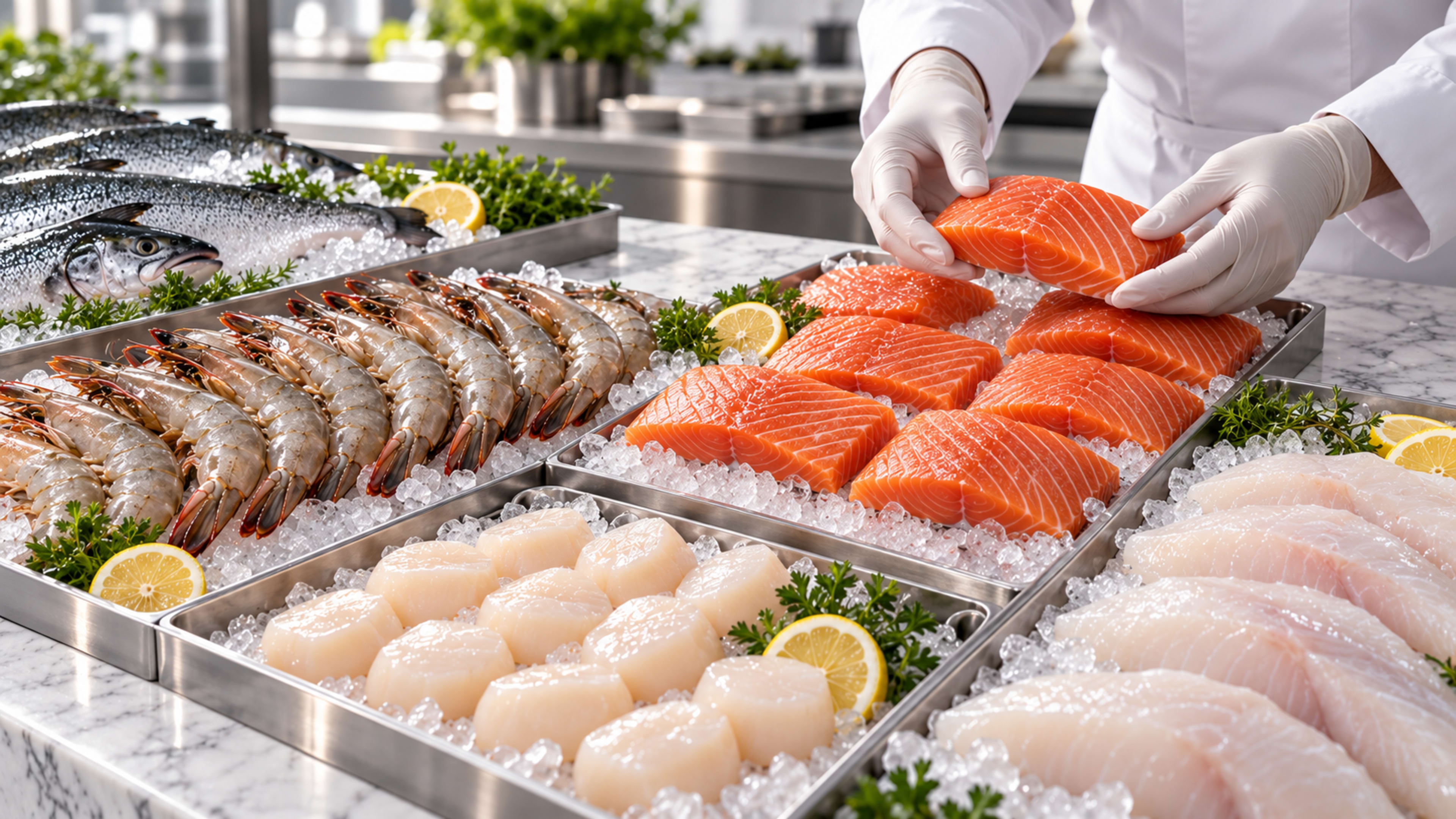
Two quotations for frozen shrimp reach a hotel’s procurement team. Both suppliers offer the same general product category, and each presents a price per kilogram.
At first glance, comparing the offers seems straightforward.
But before choosing the lower price, the buyer needs to establish what that kilogram actually represents.
Frozen seafood is sometimes protected by a thin layer of ice, commonly known as glazing. While this ice serves a legitimate purpose during frozen storage, it is not part of the seafood itself.
That distinction matters when evaluating product quantities, packaging information, and commercial quotations.
For professional kitchens purchasing frozen seafood in volume, the important question is not simply how much a frozen carton weighs. It is how much seafood the business is actually buying.
Why Frozen Seafood Is Covered in Ice
Ice glazing is a process used to protect frozen seafood during storage. A layer of water is frozen around the product, creating a protective barrier that helps reduce exposure to air and the risk of dehydration, commonly associated with freezer burn.
The practice is used across different frozen seafood categories, including shrimp and certain fish products. Glazing is therefore not inherently a sign of poor quality or an attempt to increase product weight artificially. It serves a practical purpose.
The distinction becomes important when that protective ice is confused with the weight of the seafood being sold.
According to the US Food and Drug Administration (FDA), ice glazing is a common industry practice, but its weight must not be counted as part of the declared net seafood weight under US requirements. The Codex Alimentarius standard for quick-frozen finfish similarly requires the declared net content of glazed products to exclude the glaze.
For professional buyers, this creates a useful principle: glazing can protect the product, but the quantity being purchased needs to be clearly understood.
Gross Weight, Glazed Weight, and Net Seafood Weight Are Different Measurements
A frozen seafood shipment can involve several weight measurements that should not be treated as interchangeable.
Gross weight generally refers to the combined weight of the product and its packaging, including the carton or other materials.
Glazed product weight describes the seafood together with its protective ice coating, excluding external packaging when measured separately.
Net seafood weight refers to the seafood itself, excluding the protective glaze and packaging.
Consider a hypothetical carton of frozen shrimp:
• Gross carton weight: 10.5 kg
• Frozen shrimp including glaze: 10 kg
• Protective ice glaze: 1 kg
• Net shrimp weight excluding glaze: 9 kg
In this example, the carton contains 9 kg of seafood and 1 kg of protective ice, while the remaining 0.5 kg represents packaging. The numbers are illustrative, not a standard glazing percentage or a description of any Food Box product.
The important point is that the same carton can produce different weight figures depending on what is being measured. A buyer who only sees the combined frozen weight may misunderstand how much actual seafood the shipment contains.
By contrast, if the product is correctly declared as 9 kg net seafood weight, the protective glaze has already been excluded from that declaration. The presence of ice does not automatically mean the buyer is receiving less seafood than stated. The problem arises when the declared quantity does not accurately represent the product being sold.
How Glazing Can Distort a Price Comparison
Price comparisons become misleading when procurement teams use different weight bases.
Consider two hypothetical frozen shrimp quotations. Supplier A quotes 450 EGP per kilogram of net seafood weight. Supplier B quotes 420 EGP per kilogram, but the quotation does not clearly establish whether the weight includes protective glazing.
If Supplier B’s price is based on a hypothetical frozen weight containing 10% glaze by that weight, then only 90% of the quoted quantity represents seafood. The effective price per kilogram of seafood would be: 420 ÷ 0.90 = 466.67 EGP
Under those assumptions, Supplier B’s apparently lower price would actually represent a higher cost per kilogram of seafood than Supplier A’s quotation.
This does not mean a product with glazing is automatically more expensive or less attractive. If the supplier’s quoted price already refers to the correctly declared net seafood weight, no additional adjustment for glaze should be applied.
The calculation demonstrates why procurement needs to confirm the weight basis before comparing prices. It also explains why a lower quoted price is not always meaningful until the quantity behind it has been established.
Ice Glazing Is Not the Same as Preparation Yield
It is important to separate protective ice from the normal preparation losses that occur inside a professional kitchen.
Glazing is removed to establish the quantity of seafood being purchased. Preparation yield concerns how much usable product remains after the kitchen completes the work required for a particular dish.
For example, shrimp may require peeling, cleaning, or other preparation depending on the purchased format and intended menu application. Those activities are separate from removing an external protective ice coating.
A kitchen should not automatically combine both measurements into a single unexplained loss percentage. Otherwise, procurement may have difficulty identifying whether a difference comes from the product quantity supplied or from the preparation process.
This distinction becomes especially important when comparing products that arrive in different forms. Understanding net weight establishes the purchasing baseline. Understanding preparation yield then helps the kitchen evaluate how much of that seafood becomes usable for the intended dish. Both measurements matter, but they answer different questions.
What Professional Buyers Should Check Before Ordering
A frozen seafood quotation should allow procurement to understand what is being supplied without relying on assumptions. Several details are particularly useful.
• Declared net weight: does the stated quantity represent the seafood itself, excluding any protective glaze?
• Packaging configuration: how is the product packed, and what quantity of seafood does each pack contain?
• Glazing information: is protective glazing present, and what information can the supplier provide about the product’s weight basis?
• Product form: is the quoted shrimp, fish, or other seafood supplied in the same preparation state as the product being compared?
• Price basis: does the quoted kilogram price apply to actual net seafood weight or another clearly identified measurement?
These questions are most valuable when they become part of the purchasing process before a quotation is approved. A supplier may offer a commercially suitable product with legitimate protective glazing. What procurement needs is sufficient information to understand and compare that offer accurately.
Receiving Should Verify the Agreed Quantity
Once a purchasing requirement has been defined, the receiving process should confirm that the delivery corresponds to the agreed product information. That includes checking product identity, pack quantities, and declared weights against the purchase order and accompanying documentation.
Where weight verification is necessary, the operation should use an appropriate sampling and measurement procedure rather than make assumptions based on a single carton.
International technical standards describe methods for determining the net weight of glazed frozen seafood by removing the external ice coating under controlled conditions. The process matters because simply allowing seafood to thaw and weighing what remains may introduce other changes that make the comparison unreliable.
Any verification procedure also needs to protect the condition and safety of the product. Receiving teams should not unnecessarily expose frozen seafood to unsuitable handling conditions in an attempt to check its weight. The objective is to verify the purchasing agreement through a reliable process, not to compromise the product.
Why Clear Weight Information Matters at Scale
A small difference in how a product’s weight is understood can become commercially significant when repeated across large orders. Hotels, resorts, restaurant groups, and catering businesses may purchase seafood in substantial quantities over the course of a month or season.
At that scale, unclear weight descriptions make purchasing comparisons more difficult and can complicate cost monitoring. Transparent product information helps procurement establish a consistent basis for quotation, order approval, and receiving checks.
It also gives culinary and F&B teams greater confidence in the quantity entering the operation before preparation begins. The benefit is not simply finding the lowest price. It is knowing that the price being evaluated corresponds to a clearly defined amount of seafood.
Where Food Box Fits into Frozen Seafood Purchasing
Food Box supplies premium frozen seafood solutions to professional hospitality businesses in Egypt, including hotels, restaurants, and catering operations. Its core seafood categories include shrimp, salmon, lobster, and scallops, with an emphasis on consistent quality and reliable supply.
For buyers evaluating frozen seafood quotations, net product weight, packaging format, and product specifications are relevant details to clarify during purchasing discussions.
Food Box’s publicly available information does not establish a universal glazing percentage or a standard pack-weight configuration across its products. Those details should therefore be confirmed for the specific product being requested rather than assumed.
The same applies when comparing quotations from different suppliers: product form, declared quantity, and commercial terms need to be understood before drawing conclusions about value.
The Right Comparison Starts With the Right Weight
Ice glazing is not the problem. Unclear product quantities are.
A protective layer of ice can serve a legitimate purpose in frozen seafood storage, but it should not create ambiguity about the amount of seafood being purchased.
Before approving a quotation, professional buyers should be able to identify the declared net seafood weight, understand how the product is packed, and confirm that competing offers are being evaluated on equivalent terms.
That gives procurement a more dependable starting point for purchasing decisions and the kitchen a clearer understanding of what it will receive.
For hotels, restaurants, and catering businesses reviewing frozen seafood requirements, Food Box’s team can discuss available products, packaging information, specifications, and supply arrangements.